
「相続と骨董品買取のお話 その13」共箱について(愛知県名古屋市千種区姫池通 骨董買取 古美術風光舎)
2026.01.20
先日買取に伺ったお宅でもあったお話ですが、自宅の蔵や押入れなどから骨董品を発見したものの、「付属の箱が見当たらない」ということはありませんか?
一般的に茶道具や掛軸、陶磁器、書画などの骨董品は木でできた「共箱(ともばこ)」と呼ばれる箱に入っていることがほとんどです。そして、ご推察の通り付属の箱がないと価値が下がってしまうこともあります。ですが、箱がない場合でも買取可能な場合がほとんどです。
ということで、本日の「相続と骨董品買取のお話」では、共箱が持つ役割などについてのお話を。
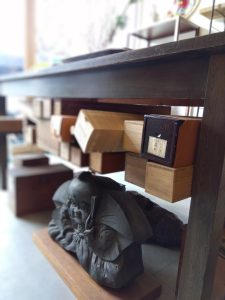
「共箱」とは、美術品や工芸品などが納められている専用の箱で、作品とセットで扱われるものです。
単なる収納箱ではなく、作品そのものの価値を大きく左右する重要な要素となります。
特に、茶道具、掛け軸、陶磁器、刀剣、書画などでは、共箱の有無が買取価格に大きな影響を与えます。
骨董品の共箱には次のような役割があり、それが査定に影響することもあります。
①箱書が価値の裏付けになる
②箱書が中身の情報特定に役立つ
③箱自体に価値がある場合もある
骨董品が収納されている共箱には「箱書(はこがき)」と呼ばれる文字が記されていることが多いです。
箱書には作者の署名や印鑑が押印されており、作品名や制作年代などが記されています。これは、いわば作品を証明する「保証書」のような役割を持ちます。もちろん中身がすり替えられていたり、箱書も偽物であったりする可能性もあるため、鑑定は必要です。しかし本物である場合、箱なしよりも箱ありの方が価値が上がります。
また、箱書が施された骨董品の共箱は、それ自体にも価値があります。有名な作品・作者であればあるほど価値がプラスされるかもしれません。ただし、そもそも共箱が作られていない骨董品も多く存在します。さまざまな理由から、作者が準備していない場合があるからです。ですが、箱なしだからといって、作品の価値がなくなったり、価値を証明できないわけではないので、ご安心ください。
ひと口に「共箱」と言っても、いくつかの種類があります。
最も価値が高いのは、作者本人が制作した箱書き(箱に書き込まれた情報)のある「共箱」です。
ほかに、作者本人ではないものの、権威ある鑑定家や団体や弟子などが箱書きをした「識箱(しきばこ)」や、家元や宗匠など権威ある人物が箱書を記した「書付箱(かけつけばこ)」があります。
これらとは別に、「合箱(あわせばこ)」と呼ばれるものがあります。
これは、作品とは無関係の箱で、後から保管のために付けられたものです。
合箱は作品の価値を直接証明するものではありませんが、時代相応の材質や造りの良い、質の高い合箱であれば、買取価格に多少プラスの影響を与えるかもしれません。
例えば、明治時代の漆器の箱など、それ自体にアンティークとしての価値があるものもあります。
ご祖父母やご両親から譲られた古びた木箱。普段何気なく見ているその箱、実は「共箱」と呼ばれる、骨董品の世界では非常に重要な存在でした。その箱自体にも、もしかしたら意外な価値が隠されているかもしれません。
作品が本物であることを保証し、どんな作品なのか探すヒントになり、さらに箱ありの方が希少価値も上がります。査定を依頼する際、箱がある場合は必ず一緒にお持ちくださいね。
もし、作品と関係のない「合箱(あわせばこ)」などの場合でも査定に影響しません。また、箱がもともとない作品や、箱がなくてもきちんと価値がある場合もあります。ご自宅に眠る箱なしの骨董品、まずは査定を依頼してみてはいかがでしょうか。
ではでは、また(スタッフT)
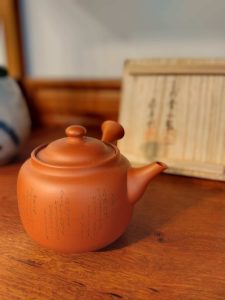
The other day, I visited a home to appraise items, and it reminded me of something: Have you ever found antiques in your home’s storage or closets, only to realize the original box is missing?
Generally, antiques like tea ceremony utensils, hanging scrolls, ceramics, and calligraphy/paintings are almost always housed in wooden boxes called “tomo-bako” (accompanying boxes). And as you might guess, the absence of the original box can sometimes lower the value. However, even without the box, we can usually still purchase the item.
So, in today’s “Inheritance and Antique Appraisal Talk,” let’s discuss the role of the accompanying box.
A “tomo-bako” is a specialized box designed to house art or craft items, treated as an integral part of the work itself.
It’s not merely a storage container; it’s a crucial element that significantly influences the work’s overall value.
Particularly for tea ceremony utensils, hanging scrolls, ceramics, swords, calligraphy, and paintings, the presence or absence of a tomo-bako greatly impacts the purchase price.
Antique storage boxes serve the following roles, which can also affect appraisal:
① The box inscription (hakogaki) serves as proof of value
② The box inscription helps identify the contents
③ The box itself may sometimes hold value
Antique storage boxes often feature writing called a “box inscription” (hakogaki).
These box inscriptions feature the creator’s signature or seal, along with details like the work’s name and creation date. They essentially serve as a “certificate of authenticity” for the piece. Of course, since there’s always the possibility the contents were swapped or the box inscription is fake, authentication is necessary. However, if genuine, an item with its original box holds greater value than one without.
Furthermore, the storage box itself, bearing the box inscription, holds value. The more famous the work or artist, the greater the added value may be. However, many antiques simply do not come with a storage box. This is because, for various reasons, the artist may not have prepared one. But rest assured, the absence of a box does not mean the work loses its value or that its authenticity cannot be proven.
While we generally refer to it as a “storage box,” there are several types.
The most valuable is the “original box” bearing the box inscription (information written directly on the box) by the artist themselves.
Other types include the “attested box” (shikibako), inscribed by an authoritative appraiser, organization, or disciple, though not the artist themselves, and the “inscribed box” (kaketsukebako), inscribed by an authoritative figure like a headmaster or master.
Separate from these is the “assigned box” (awase-bako).
This is a box unrelated to the work itself, added later for storage purposes.
While an assigned box does not directly prove the work’s value, a high-quality one made of period-appropriate materials and well-crafted may slightly increase the purchase price.
For example, boxes for Meiji-period lacquerware sometimes hold antique value in their own right.
That old wooden box passed down from your grandparents or parents? That box you casually glance at every day might actually be a “kyōbako”—a box of immense importance in the world of antiques. The box itself could potentially hold unexpected value.
The box guarantees the work’s authenticity, provides clues about the piece itself, and further increases its rarity value. When requesting an appraisal, always bring the box along if you have it.
Even if the box is unrelated to the piece, such as a “matching box,” it won’t affect the appraisal. Also, some pieces never came with a box, and others retain significant value even without one. Why not request an appraisal for your boxless antiques?
Well then, see you later (Staff T)
*******************
年の瀬にむけて、ご実家の整理やお片付けなどをされている方のご相談などが多くございます。
寒さが厳しくなってきましたので、お片付けなどくれぐれもご無理のないようになさってくださいませ。
風光舎では古美術品や骨董品の他にも絵画や宝石、趣味のお品など様々なジャンルのものを買受しております。
お片付けをされていて、こういうものでもいいのかしらと迷われているものでも、どうぞお気軽にご相談下さいませ。
また風光舎は、出張買取も強化しております。ご近所はもちろん、愛知県内、岐阜県、三重県その他の県へも出張いたします。
まずは、お電話お待ちしております。
愛知県名古屋市千種区姫池通
骨董 買取【古美術 風光舎 名古屋店】
TEL052(734)8444
10:00-18:00 OPEN
#出張買取#骨董#古美術#骨董品#絵画#版画#茶道具#刀剣#彫刻
