
「相続と骨董品買取のお話 その12 鑑賞石の買取」(愛知県名古屋市千種区姫池通 骨董買取 古美術風光舎)
2025.12.20
本日は「相続と骨董品買取のお話」の続編ですが、今日のお話は鑑賞石・銘石であります。
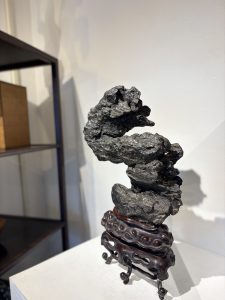
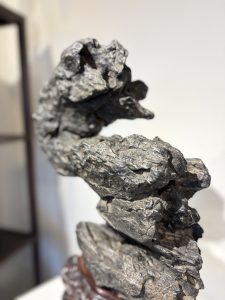
買取にお伺いしますと、鑑賞石・銘石も買取してほしいというご依頼が結構ありまして、そういえば、実家にもリビングや玄関先に飾っていたりしていたことを思い出しまして、あの頃ブームだったのでしょうね。
鑑賞石・銘石とは、その美しさや希少性から鑑賞の対象となる石のことでして、昭和の時代には石ブームがあり、リビングや玄関先に飾っていたお宅も多かったのではないでしょうか。現在も多くの愛好家いる鑑賞石・銘石ですが、その歴史文化は長く、歴史の中で人々の美的感覚や価値観と共に発展してきました。
日本では古くは鎌倉時代に、天皇や貴族、武士たちが自然の造形美を愛でる文化として発展しましたが、山のような形状の石を山景に見立て自然の風景を石の中に凝縮して楽しむ「山景石」や、石に現れた菊の花や梅の花のような模様を鑑賞する「菊花石」「梅花石」などが、当時の鑑賞石として珍重されていました。
では、それらの鑑賞石などの魅力は。
その石そのものの美しさや希少性もそうなのですが、長い年月をかけて自然が作り出した造形美や、そこに込められた歴史や文化、産地や種類、形状、模様、色合い、などなどさまざまな要素をもって魅力が生まれ人々を惹きつけています。
自然物が偶然にも数億年かけて生み出した石に、模様の美しさに魅了されたり、景色に見立てる想像力を掻き立てられたりと、この「生きた芸術品」には奥深い世界が広がっているようですね。
少しですが、代表的な鑑賞石・銘石をご説明いたしましょう。
・太湖石
中国の蘇州付近にある太湖周辺の丘陵から切り出される穴の多い複雑な形の奇石。太湖付近の丘や湖に浮かぶ島は青白い石灰岩でできているが、かつて内海だった太湖の水による長年の侵食によって石灰岩には多くの穴が開き、複雑な形と化した。
太湖石は蘇州はじめ中国各地の庭園で鑑賞や瞑想などのために置かれており、北宋の徽宗皇帝は人民を徴用して、太湖石などを都に運ばせた。これを花石綱というようです。
・糸魚川翡翠
新潟県糸魚川周辺で産出される日本の国石(国の石)。5億年以上前に形成された非常に希少な宝石であり、世界最古の翡翠文化の発祥地であります。白、緑(様々な色調)、青、黒など多様な色があり、縄文時代から加工され日本各地へ流通しており、勾玉やアクセサリーが作られ、海岸で原石を探す「ヒスイ拾い」も人気のようです。なお、産地は国の天然記念物に指定され採取は厳しく制限されています。
・神居古潭石
神居古潭石(カムイコタンセキ)は、北海道旭川市の神居古潭で採掘される鉱石。溶岩が地殻変動による圧力を受けて生成された変成岩の一種で、主なカラーは緑・黒・藍などです。これらの色が複雑に混ざり合ったもののほか、全体が黒色のもの・緑色のものなども流通しています。
・菊花石
岐阜県本巣市などが産地として有名で、輝緑凝灰岩の中に放射状に成長した結晶が菊の花のように見えることから名付けられました。昭和27年には特別天然記念物に指定され、その美しさから多くの愛好家を魅了しています。
・梅花石
北海道夕張市の空知川や北九州の門司で採取される石で、約3億5千万年前の古生代石炭紀の海底に繁殖したウミユリという棘皮動物の化石が梅の花のように見えることから名付けられました。
「菊花石」「桜石」とともに日本三大奇石のひとつとされ、その歴史的な価値も高く評価されています。
また、それらの鑑賞石・銘石の価値の評価ですが
・石の美しさ形状、模様、色合いなど、自分の好みや感性に合う石を選びましょう。
・希少性産地や種類、形状、模様など、希少性の高い石は、価値も高くなります。
・歴史的な価値過去の文化や歴史背景を理解し、歴史的な価値のある石を選ぶことも重要です。
・状態傷や欠け、変色などがないか、状態の良い石を選びましょう。
鑑定書のある場合は、その石の種類、産地、年代、状態などを専門家が鑑定したもので、その石の価値を証明する重要な書類ですので、大切に保管しましょう。
また、箱は石を保護するだけでなく、その石の歴史や価値を伝える役割も担いますので、鑑定書の他に箱があることで、鑑賞石・銘石の価値はさらに高まります。
また、これらの鑑賞石・銘石は保管方法によってその美しさを長く保てますので、直射日光や高温多湿を避け、埃や汚れから守るようにしましょう。
鑑賞石・銘石のその美しさ、希少性、歴史的な価値や魅力などをお伝えいたしましたが、いかがでしたでしょうか。
鑑賞石・銘石は、古今東西、人々を惹きつけて止まない「生きた芸術品」に、その美しさを鑑賞し、歴史に思いを馳せることで、みなさん自身の感性を豊かにしてくれる魅力的な存在のようですね。ご自宅やご実家に「そういえば…」と、眠っている鑑賞石・銘石があるしれません、もし見つかりましたら、今一度あらためて眺めてみてはどうでしょうか。
また、行先迷われた鑑賞石・銘石などございましたら、古美術風光舎へご相談下さい。(スタッフY)
Today’s topic is a follow-up to “Inheritance and Antique Purchasing,” focusing on decorative stones and famous stones.
When we visit for purchases, we often receive requests to buy decorative stones and famous stones as well. Come to think of it, I remember them being displayed in the living room or entranceway of my childhood home. I suppose they were quite the trend back then.
Appreciation stones and inscribed stones are stones valued for their beauty and rarity, making them objects of admiration. During the Showa era, there was a stone craze, and many homes likely displayed them in their living rooms or entryways. While appreciation stones and inscribed stones still have many enthusiasts today, their history and culture are long, evolving alongside people’s aesthetic sensibilities and values throughout history.
In Japan, this culture developed as early as the Kamakura period, where emperors, nobles, and samurai appreciated the natural sculptural beauty of stones. Stones shaped like mountains, known as “mountain view stones” (yama-gokei-seki), were prized for condensing natural landscapes within them. Similarly, stones displaying patterns resembling chrysanthemum or plum blossoms, called “chrysanthemum stones” (kikuka-seki) and “plum blossom stones” (bai-ka-seki), were treasured as decorative stones of the time.
So, what is the appeal of these and other ornamental stones?
While the inherent beauty and rarity of the stone itself are factors, its charm arises from a multitude of elements: the sculptural beauty crafted by nature over eons, the history and culture embedded within it, its origin and type, its shape, patterns, coloration, and more.
These “living works of art” reveal a profound world—whether captivating us with the beauty of patterns fortuitously created by nature over hundreds of millions of years, or sparking our imagination to envision landscapes within them.
Let me briefly introduce some representative ornamental and famous stones.
・Taihu Stone
These are oddly shaped stones with many holes, quarried from the hills around Lake Tai near Suzhou, China. The hills and islands floating in Lake Tai are made of pale blue limestone. Over time, the water of Lake Tai—once an inland sea—eroded the limestone, creating numerous holes and giving the stones their complex forms.
Taihu stones are placed in gardens throughout China, including Suzhou, for appreciation and meditation. Emperor Huizong of the Northern Song Dynasty conscripted laborers to transport Taihu stones and other rocks to the capital. This operation is known as the “Flower Stone Fleet.”
・Itoigawa Jade
Japan’s national stone, produced around Itoigawa in Niigata Prefecture. Formed over 500 million years ago, it is an extremely rare gemstone and the birthplace of the world’s oldest jade culture. It comes in diverse colors including white, green (various shades), blue, and black. Processed since the Jomon period, it circulated throughout Japan, used to make magatama pendants and accessories. “Jade hunting”—searching for raw stones along the coast—is also popular. The production area is designated a National Natural Monument, and extraction is strictly restricted.
・Kamui Kotan Stone
Kamui Kotan Stone is an ore mined in Kamui Kotan, Asahikawa City, Hokkaido. It is a type of metamorphic rock formed when lava underwent pressure due to crustal movement. Its primary colors are green, black, and indigo. Varieties circulating include those with complex mixtures of these colors, as well as entirely black or entirely green stones.
・Chrysanthemum Stone
Famous for being produced in places like Motosu City, Gifu Prefecture, it was named for the crystalline formations growing radially within pyroxene tuff, resembling chrysanthemum flowers. Designated a Special Natural Monument in 1952, its beauty captivates many enthusiasts.
・Plum Blossom Stone
This stone is mined in the Sorachi River in Yubari City, Hokkaido, and in Moji, Kitakyushu. It is named for the fossils of sea lilies, echinoderms that thrived on the seafloor during the Carboniferous period of the Paleozoic era approximately 350 million years ago, which resemble plum blossoms.
Alongside Chrysanthemum Stone and Cherry Blossom Stone, it is considered one of Japan’s Three Great Curious Stones and is highly valued for its historical significance.
Regarding the evaluation of the value of these ornamental and prized stones:
・The Stone’s Beauty
Choose stones whose shape, pattern, and coloration match your personal taste and sensibility.
・Rarity
Stones with high rarity—due to their origin, type, shape, or pattern—tend to have higher value.
・Historical Value
Understanding the past culture and historical background is important for selecting stones with historical significance.
・Condition
Choose stones in good condition, free from scratches, chips, discoloration, etc.
If an appraisal certificate is available, it is an important document certifying the stone’s value, as it details the stone’s type, origin, age, condition, etc., as assessed by an expert. Keep it in a safe place.
Furthermore, the box not only protects the stone but also serves to convey its history and value. Therefore, having the box in addition to the appraisal certificate further enhances the value of the ornamental or famous stone.
Furthermore, the beauty of these decorative and famous stones can be preserved long-term through proper storage. Avoid direct sunlight, high temperatures, and humidity, and protect them from dust and dirt.
We’ve shared the beauty, rarity, historical value, and charm of decorative and famous stones. What do you think?
These “living works of art,” captivating people throughout history and across cultures, seem to be truly enchanting entities. By appreciating their beauty and reflecting on their history, they enrich your own sensibilities. You might find a forgotten decorative or inscribed stone lying around your home or family residence. If you do discover one, why not take another look at it?
If you have any decorative stones or inscribed stones that you’re unsure about, please feel free to consult with Fūkosha Antiques.
*******************
年の瀬にむけて、ご実家の整理やお片付けなどをされている方のご相談などが多くございます。
寒さが厳しくなってきましたので、お片付けなどくれぐれもご無理のないようになさってくださいませ。
風光舎では古美術品や骨董品の他にも絵画や宝石、趣味のお品など様々なジャンルのものを買受しております。
お片付けをされていて、こういうものでもいいのかしらと迷われているものでも、どうぞお気軽にご相談下さいませ。
また風光舎は、出張買取も強化しております。ご近所はもちろん、愛知県内、岐阜県、三重県その他の県へも出張いたします。
まずは、お電話お待ちしております。
愛知県名古屋市千種区姫池通
骨董 買取【古美術 風光舎 名古屋店】
TEL052(734)8444
10:00-18:00 OPEN
#出張買取#骨董#古美術#骨董品#絵画#版画#茶道具#刀剣#彫刻
