
年の瀬はいつごろから?(愛知県名古屋市千種区姫池通 骨董買取 古美術風光舎)
2025.12.13
年の瀬も押し迫り、クリスマス用品だけでなく既にお節料理の材料も店頭に並ぶようになりました。
何気なく「年の瀬」と書き出しましたが、ふと「年の瀬」とはいつから?疑問が湧いてきました。「年末」「歳末」「師走」「年の暮れ」などこの時期を表す言葉は色々ありますが、いずれもはっきりとした日にちは定められていないようです。
ただ「日本大歳時記」では「年の暮れ」について、全国的に13日頃にお正月の準備を始める地域が多く、その頃から「年の暮れ」をイメージする人が多いとされています。
またいくつかの国語辞典では「年の瀬」の時期を12月の終わりに近い頃と示しているものもあるようです。江戸時代は商品を買った際に後払い(つけ払い)にし、お盆と年末にまとめて支払うことが多く、年の瀬はつけ払いを全て清算し、無事に年を越せるかどうかと気忙しい時期とされています。
もともと年の瀬の「瀬」という言葉は「川の流れの急なところ」を意味し、慌ただしい年の暮れを川の瀬に見立てて「年の瀬」と言われるようになったとか。
年末年始の一番出費が多い時期にツケをまとめて払うなんて、なかなかスリル満点です。まさに川の瀬を渡り切れるかどうかの時期だったのですね。「年の瀬も押し迫る」という表現もなんだか納得してしまいます。
年の暮れといえば、最近あちらこちらで福引の「ガラガラ(ガラポン?)」を回す音が聞こえてきます。「大当たりー」などの声を聞くとつい景品が気になります。個人的にはガラガラで良い思い出はないのですが、今でもハンドルを回す時には子どもの頃と変わらずワクワクします。先日も3回ほど回しましたが全て外れでした…。なるべくゆっくり回すと当たりやすくなると聞いたことがありますが、本当でしょうか?あの六角形の中はどのような仕組みになっているのか気になるところです。
六角形のガラガラと回す抽選器は大正時代に新井卓也さんという方が開発しました。もともとは「新井式回転抽選器」という長い名前だったそうですが、今は「ガラガラ(ガラポン)」という呼び名が定着しています。さすが日本のオノマトペ文化!といったところでしょうか。
お金を払って買えばいいものを、なぜかガラガラやくじ引きで当たる方が嬉しく感じるのは、「福引」とも呼ばれるように、景品以外の価値を感じるからかもしれません。
日本の福引の原型を作ったのは聖武天皇だといわれています。730年に聖武天皇が正月の宴で列席者に「仁」「義」「礼」「智」「信」のうち一文字が書かれた短冊を選ばせ、その文字に応じた景品を与えたのだとか。
江戸時代になると「富突き」という賞金が当たるくじが流行しました。箱に入った木札を小さな穴から錐(きり)で突き刺し、木札の番号から当落を決める方式でした。
玩具や飴を景品とした福引もあり、たくさんの紐の中から1本を選び、先に結びつけられたおもちゃがもらえ、子供に大人気だったとか。そういえば、昔駄菓子屋でたくさんの紐の先に付けられた飴玉が売っていました。何色が当たるかドキドキしたものです。今も昔も変わらない光景ですね。
現在、覚王山商店街でも「年末福引大会」が行われています。
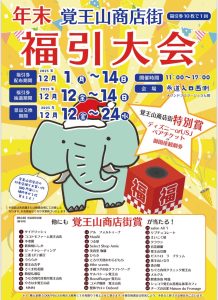
明日の12月14日までお買い物500円ごとに福引券1枚がもらえます。
抽選会期間:12月12日~12月14日
時間:11:00~17:00
会場:日泰寺参道入口西側
今回の特別賞はディズニー or USJペアチケット 、または御園座 観劇券!
他にも覚王山商店街のお店の商品のが多数当たるそうです。
お時間のある方はぜひ立ち寄ってみてはいかがでしょうか。
それでは、また次の機会に。(スタッフH)
As the year draws to a close, not only Christmas goods but also ingredients for New Year’s dishes have begun appearing on store shelves.
I casually wrote “year’s end,” but suddenly wondered: When exactly does “year’s end” begin? There are various terms for this season—year’s end, year’s close, the twelfth month, year’s closing—but none seem to clearly define a specific date.
However, the Nihon Taiseiki (Great Japanese Almanac) notes that for “year’s end,” many regions nationwide begin New Year’s preparations around the 13th, and many people start associating the “year’s end” with that time.
Additionally, some Japanese dictionaries seem to indicate the period for “year’s end” as being closer to the end of December. During the Edo period, purchases were often made on credit, with payments settled in bulk during Obon and year-end. Thus, the year’s end was seen as the period for settling all outstanding debts, determining whether one could safely see out the year.
The character “瀬” (se) in ‘年の瀬’ originally meant “a rapid part of a river’s flow.” The hectic year-end was likened to such a river rapids, giving rise to the term “年の瀬.”
Paying off all those outstanding debts during the most expensive time of the year—the year-end and New Year period—is quite thrilling. It truly was a time of crossing the river rapids. The expression “the year’s end is fast approaching” suddenly makes perfect sense.
Speaking of December, lately you can hear the sound of “garagara” (garapon?) lottery wheels spinning everywhere. Hearing shouts like “Big win!” makes me curious about the prizes. Personally, I don’t have fond memories ofガラガラ, but turning the handle still gives me the same thrill as when I was a kid. I tried it about three times the other day, but came up empty every time… I’ve heard that turning it slowly increases your chances of winning. Is that true? I’m also curious about the mechanism inside that hexagonal drum.
The hexagonalガラガラ lottery machine was developed during the Taisho era by a man named Takuya Arai. Originally it had the long name “Arai-style Rotating Lottery Device,” but now the name “garagara (garapon)” has become established. Truly a testament to Japan’s onomatopoeic culture.
Even though you could just pay money to buy something, for some reason winning it through a garagara or lottery feels more exciting. Perhaps it’s because, as it’s also called “fukubiki” (lucky draw), you can feel a value beyond just the prize itself.
It’s said that Emperor Shōmu created the prototype for Japan’s fukubiki. In 730, during a New Year’s banquet, he had attendees select a strip of paper bearing one of the characters “Benevolence,” “Righteousness,” “Propriety,” “Wisdom,” or “Trustworthiness,” awarding prizes corresponding to the chosen character.
During the Edo period, a lottery called “Tomitsuki” (Fortune Poke) became popular. It involved poking a wooden tag inside a box through a small hole with an awl, determining winners and losers based on the tag’s number.
There were also fukubiki with toys or candies as prizes. Children would choose one string from a large bunch, and the toy tied to the end of that string was theirs. It was hugely popular with kids. Come to think of it, old candy shops used to sell strings with candies attached to the ends. I remember the thrill of wondering what color I’d get. It’s a scene that hasn’t changed over the years.
Currently, the Kakuozan Shopping Street is also holding its “Year-End Lucky Draw Event.”
Until tomorrow, December 14th, you receive one lucky draw ticket for every 500 yen spent.
Drawing Period: December 12th – December 14th
Time: 11:00 AM – 5:00 PM
Venue: West side of the entrance to the path leading to Nittaiji Temple
This year’s special prizes are Disney or USJ pair tickets, or Misonoza theater tickets!
Plus, there are many other prizes featuring items from shops in the Kakuozan Shopping Street!
This time’s special prize is Disney or USJ pair tickets, or Misonoza theater tickets!
Plus, there are lots of other prizes from shops in Kakuozan Shopping Street!
If you have time, why not stop by?
Well then, until next time. (Staff H)
*******************
ご実家の整理やお片付けなどをされている方のご相談などが多くございます。
お片付けなどくれぐれもご無理のないようになさってくださいませ。
風光舎では古美術品や骨董品の他にも絵画や宝石、趣味のお品など様々なジャンルのものを買受しております。
お片付けをされていて、こういうものでもいいのかしらと迷われているものでも、どうぞお気軽にご相談下さいませ。
また風光舎は、出張買取も強化しております。ご近所はもちろん、愛知県内、岐阜県、三重県その他の県へも出張いたします。
まずは、お電話お待ちしております。
愛知県名古屋市千種区姫池通
骨董 買取【古美術 風光舎 名古屋店】
TEL052(734)8444
10:00-18:00 OPEN
#出張買取#骨董#古美術#骨董品#絵画#版画#茶道具#刀剣#彫刻
